blog
Permanent Lighting Cost vs Seasonal Lights: 2026 Guide
Editorial Team · Oct 21, 2026 · 13 min read
Table of Contents
- Permanent vs Seasonal Lighting: The Real Cost Picture
- Upfront Installation Cost: Permanent vs Seasonal
- Recurring Seasonal Costs: Installation and Takedown Every Year
- Permanent Outdoor Lighting Cost Over 10 Years
- Permanent Outdoor Lights Lifespan, Durability, and Repairs
- Are Permanent Holiday Lights Worth It? Convenience, Safety, and Flexibility
- Warranty, Removal, and Resale Considerations
- Conclusion
- Frequently Asked Questions
Last Updated: October 21, 2026
Permanent vs Seasonal Lighting: The Real Cost Picture
Permanent lighting cost and seasonal lighting cost are not the same kind of number, and that is the trap. Permanent lighting is a one-time capital purchase; seasonal lights are a recurring operating expense you pay every year. Comparing them line by line without accounting for that difference is how homeowners talk themselves into the wrong decision.
Below, we break down both sides honestly, including where permanent lighting is the worse deal.
Why Upfront Price Only Tells Half the Story
A seasonal quote feels cheap because you are renting the result for six weeks. A permanent system feels expensive because you are buying hardware, wiring, labor, and controls all at once.
The fair comparison is total spend over time, not the first invoice: every seasonal install, takedown, replacement strand, extension cord, and the value of your ladder hours. Only then does the permanent number make sense.
Upfront Installation Cost: Permanent vs Seasonal
Permanent lighting costs more upfront than a single season of professional holiday light installation. That gap is real; what matters is how wide it is once you strip out the assumptions.
Pricing for both options depends heavily on roofline length, home height, accessibility, and the system you choose. We do not publish fixed figures because a single-story ranch and a two-story with multiple gables are not comparable jobs. Get a written quote for your property rather than trusting a national average.
How a Permanent Lighting Quote Is Actually Built
Most permanent lighting proposals are assembled from four line items, and knowing them lets you compare bids on equal footing:
- Fixtures and channel, priced per linear foot. A typical installed range runs roughly $20 to $45 per linear foot for a mid-grade LED puck or strip system, with premium fixtures and thicker channel pushing toward the top of that band.
- Controller and power supply. App-controlled color systems add a controller, a power supply, and often a low-voltage transformer.
- Electrical tie-in. If an exterior GFCI outlet is already near the roofline, the wiring run is short. If the crew must run a new circuit from the panel or add an exterior outlet, that is a separate electrical line item.
- Labor and access. Second-story work, steep pitch, and tight side yards add setup, safety equipment, and crew hours. A straightforward single-story run can be installed in a day; a multi-gable two-story with landscaping obstacles can take two or three.
What a Seasonal Quote Actually Covers
A professional holiday lighting quote is usually priced per linear foot of roofline plus per tree or bush, bundling hanging, in-season maintenance, and takedown. A common structure is a per-foot install rate plus a separate takedown charge, with annual storage if the company keeps your strands. Because it recurs, the first-year number looks small next to a permanent system, but it is the same charge every year.
Regional and Home-Specific Price Factors
Two homes with identical roofline lengths can receive quotes that differ by thousands of dollars. The variables that move the number most:
- Roofline length and complexity. Dormers, valleys, and multiple gables multiply fixture count and labor time per foot.
- Roof height and pitch. Walkable low-slope roofs are fast; steep second-story runs require fall protection and slower work.
- Access. Mature landscaping, steep grades, and narrow side yards slow crews and sometimes require lifts.
- Local labor rates.
- Climate.
- Electrical access. Distance from the panel to the roofline drives the wiring line item.
The Like-for-Like Trap
Comparing a permanent quote to one season of seasonal service is not fair: the permanent quote buys hardware you keep, while the seasonal quote rents a result for six weeks. Compare the permanent quote to the full seasonal spend for the same roofline, install, takedown, storage, replacement strands, and mid-season service calls, multiplied by the years you plan to stay.
Recurring Seasonal Costs: Installation and Takedown Every Year
Professional Christmas light installation cost is a yearly charge in two parts: hanging the lights in late fall and removing them in January. Many companies bill those separately, and some charge storage if they keep your strands.
Add the hidden line items: strands fail, clips break, storms take down sections, and you pay for replacements or repairs.
The recurring model never ends: you pay whether the season is good or bad, whether you travel, and whether you still like the look.
Permanent Outdoor Lighting Cost Over 10 Years
Here is where permanent outdoor lighting cost separates from seasonal spending. A permanent system is a fixed investment that stops generating installation charges after year one; seasonal lighting generates a new charge every year, forever.
Over a decade, you compare one purchase plus minor upkeep against ten rounds of install, takedown, and replacement. The permanent side flattens out; the seasonal side does not. The useful question is not whether permanent wins eventually, but when, and under what assumptions.
A Transparent Ten-Year Cost Model
Below is a like-for-like model using clearly stated assumptions. Substitute your own quotes; the structure is what matters.
Assumptions for the example:
- Roofline: 150 linear feet, single story, straightforward access
- Permanent system quote: $6,000 installed, including controller and electrical tie-in
- Seasonal professional service: $1,200 per year for install, takedown, and storage on the same roofline
- Seasonal replacement and repair: $150 per year average for failed strands, clips, and storm damage
- Permanent repair reserve: $150 per year average for occasional fixture or controller service
- Electricity: $0.17 per kWh, 150 feet of LED at roughly 1.5 watts per foot, 5 hours per night, 60 nights per year
Electricity math (permanent): 150 ft x 1.5 W = 225 W, or 0.225 kW. At 5 hours x 60 nights = 300 hours, that is 67.5 kWh per year, or about $11.50 annually at $0.17 per kWh.
| Year | Seasonal cumulative | Permanent cumulative |
|---|---|---|
| 1 | $1,350 | $6,012 |
| 2 | $2,700 | $6,174 |
| 3 | $4,050 | $6,336 |
| 4 | $5,400 | $6,498 |
| 5 | $6,750 | $6,660 |
| 6 | $8,100 | $6,822 |
| 10 | $13,500 | $7,470 |
In this scenario, break-even lands in year five. Change any input and the answer moves: a $9,000 quote pushes break-even to year seven or eight; a $2,000 annual seasonal bill pulls it into year three.
Break-Even Scenarios
Payback depends on four inputs: your permanent quote, your annual seasonal spend, your average yearly repair cost on each path, and how long you stay. A few patterns:
- High seasonal spend, simple roofline. Break-even often arrives in three to five years.
- Moderate seasonal spend, complex roofline. Break-even commonly lands in six to eight years.
- Low seasonal spend or a short planned stay. Seasonal service can win on pure cash flow, and that is an honest outcome.
Energy Use and Operating Costs
Operating cost is the most overstated difference in this debate. Modern LED systems draw very little power, adding a small amount to a monthly bill for a few evening hours; seasonal incandescent strands can pull noticeably more for the weeks they run.
The real operating variable is behavior. App-controlled schedules mean the lights run only when you want them, not all night. Set a schedule and the energy question mostly answers itself.
Ownership, Removal, and Resale
A permanent system is mounted to the home, so moving means leaving it as a selling feature or paying for removal. Removal is possible but not free, and reinstalling at a new property is a fresh installation job, not a simple transfer. On resale, year-round exterior lighting photographs well and reads as a maintained property; whether it adds measurable value depends on the buyer, but it rarely hurts.
Permanent Outdoor Lights Lifespan, Durability, and Repairs
Permanent outdoor lights lifespan depends on build quality and weather handling.
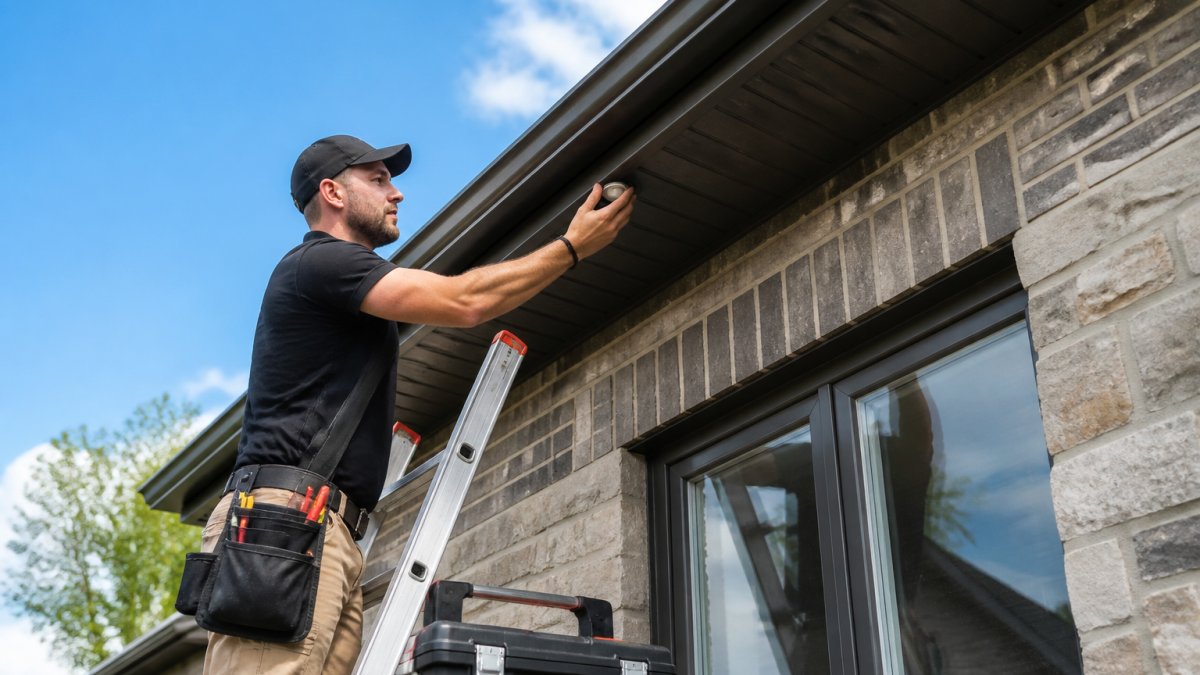
Durability is where cheap installations fail: unsealed fixtures, channel not fastened for ice and wind, and exposed wiring all shorten life and drive repair calls.
Repairs on a permanent system tend to be targeted: a single fixture, a section of channel, or the controller. Seasonal strands are more often replaced wholesale when a section dies.
Are Permanent Holiday Lights Worth It? Convenience, Safety, and Flexibility
Permanent holiday lights are worth it for homeowners who value time, safety, and year-round flexibility over the lowest possible first-year spend.
The convenience case is strong. No November ladder work, no January takedown in the cold, no storage bins in the garage.
Safety matters too. Ladder falls are a genuine risk, and eliminating the annual climb removes it entirely.
Flexibility is the underrated benefit. An app-controlled system lets you set warm-white architectural lighting for most of the year, then switch to holiday colors, game-day scenes, or event lighting with a tap.
Warranty, Removal, and Resale Considerations
Ask about warranty coverage before you sign: what is covered, for how long, and whether labor is included in a claim.
Removal and resale come up more than people expect. A permanent system is mounted to the home, so moving means either leaving it as a selling feature or paying to have it removed.
On resale, year-round exterior lighting is a visible upgrade that photographs well and reads as a maintained property. Whether it adds measurable value depends on the buyer, but it rarely hurts.
Conclusion
Both options look reasonable until you run the ten-year math, and most homeowners never do. Seasonal lighting wins on year-one cash flow; permanent lighting wins on total cost, safety, and year-round use, provided you stay put long enough for break-even to arrive.
At Curb Appeal Permanent Lights, we install discreet, app-controlled LED systems with customizable colors, brightness, and schedules, plus an online visualizer so you can preview the design on your own home before committing. No ladders, no storage bins, no annual takedown.
See it on your home and get a quote built around your actual roofline.
Frequently Asked Questions
Is permanent outdoor lighting cheaper than seasonal lights over time?
It depends on how many years you keep the system and what you pay for seasonal labor. Permanent lighting carries a higher upfront installation cost, but it eliminates the annual installation and takedown bill, the cost of replacing burned-out strands, and the ladder work. For homeowners who hire out holiday lighting every year, the permanent lighting cost often breaks even within a handful of seasons. Ask for a written quote and compare it against your actual seasonal spending, not a guess.
Do Christmas lights run up your electric bill?
LED lights draw very little power, so the electricity cost of either option is usually small compared with the installation and labor. A permanent LED system running a few hours a night for a holiday season adds only a modest amount to your monthly bill. The bigger variable is how many hours you run them and whether you leave them on year-round. App-controlled schedules and timers help you keep operating costs predictable.
How long do permanent Christmas lights last?
Quality permanent LED systems are built to handle years of weather, with many rated for a decade or more when installed correctly. Lifespan depends on the fixture quality, how well the wiring is sealed, and local weather exposure. Ask about the warranty terms and what it covers, since repairs and replacement costs affect the true long-term cost. A professional installation that seals connections properly is the biggest factor in how long the system lasts.
What costs should I include when comparing permanent and seasonal lighting?
Build a like-for-like model that includes the upfront installation quote, annual labor for hanging and removing seasonal lights, replacement bulbs and strands, storage, electricity, and any repairs over time. Add the value of your own time if you install seasonal lights yourself. Compare the totals over five and ten years rather than one season. Request a quote from Curb Appeal Permanent Lights to plug real numbers into that comparison.