comparison
Are Permanent Holiday Lighting Systems Worth It in 2026?
Editorial Team · Nov 15, 2026 · 11 min read
Last Updated: November 14, 2026
Quick Summary
A permanent holiday lighting system is worth it in 2026 if you want year-round, app-controlled color without the annual ladder routine. Professional systems lead on finish and support, while DIY kits win on upfront price but leave mounting, routing, and troubleshooting to you.
- Linear feet of coverage is the single biggest lever driving the cost of permanent holiday lighting.
- Second-story work requires ladders, lifts, or scaffolding, and that access cost is real.
- Splicing a DIY kit voids many warranties if the cut isn't sealed correctly.
- Ask for linear feet, fixture count, controller count, labor hours, and warranty terms as separate lines.
- Confirm what the warranty covers and who performs the repair before you buy.
Table of Contents
- Permanent Holiday Lighting System Reviews 2026: Quick Comparison
- The Best Permanent Outdoor Lights 2026: Brand-by-Brand Breakdown
- Average Cost of Permanent Holiday Lighting: What Drives the Price
- Trimlight Permanent Christmas Lights: What Buyers Should Know
- DIY Permanent Holiday Lighting System Reviews 2026: Where Kits Fall Short
- Durability, Weather Resistance, and Long-Term Maintenance Costs
- How to Choose a Permanent Lighting System for Your Home
- See It On Your Home Before You Commit
- Frequently Asked Questions
Permanent Holiday Lighting System Reviews 2026: Quick Comparison
A permanent holiday lighting system is a professionally installed or DIY LED setup that stays on your home year-round, replacing the annual ladder routine with app-controlled color and scheduling. Curb Appeal Permanent Lights installs these systems across Michigan. Buyers today generally want fewer ladders, better apps, and clear answers about cost. This guide compares the leading options, explains what drives price, and shows where DIY kits fall short. Below, we break down the best permanent outdoor lights for 2026 so you can decide with clear eyes.
| Option | Type | Best For | Main Trade-off |
|---|---|---|---|
| Curb Appeal Permanent Lights | Professional install | Homeowners who want it done right | Requires a service visit |
| Govee Permanent Outdoor Lights | DIY kit | Budget-minded DIYers | No professional support |
| Eufy Permanent Outdoor Lights | DIY kit | Custom layouts on a budget | Limited verified warranty detail |
| Oelo / Trimlight | Professional brand | Comparing pro-grade systems | Pricing requires a quote |
How We Evaluated These Systems
Our criteria are simple: lighting quality, app usability, installation method, durability, warranty support, and long-term value. We weigh total ownership cost, not just the sticker price. A cheap kit that fails in three winters costs more than a system that lasts a decade. We also consider how each option handles roofline coverage and daily architectural lighting, since a system that only looks good in December misses the point of year-round use. Where manufacturer claims can't be independently verified, we say so.
The Best Permanent Outdoor Lights 2026: Brand-by-Brand Breakdown
The best permanent outdoor lights in 2026 balance brightness, color accuracy, and app control with real durability. Professional systems lead on finish and support; DIY kits win on upfront price. Here is how the main options compare.
Govee Permanent Outdoor Lights
Govee is the name most DIYers encounter first. Its 100-foot sets can be cut and spliced for a custom fit, and the brand publishes its own cost guidance comparing DIY and professional installation. That transparency is welcome. The catch: you handle mounting, routing, and any troubleshooting yourself, and the supplied reviews don't detail warranty or support terms. For a handy homeowner, that's a fair trade. For anyone who dreads a ladder, it isn't.
Eufy Permanent Outdoor Lights
Watch out: splicing a DIY kit voids many warranties if the cut isn't sealed correctly, and a failed splice mid-roofline means redoing that run.
Oelo and Trimlight: Professional-Grade Options
For a sense of how a concealed professional run differs from a visible kit, see how one continuous line that traces the architecture works in practice.
Average Cost of Permanent Holiday Lighting: What Drives the Price
The cost of permanent holiday lighting depends on your property. Here is a breakdown of the factors that affect a quote, so you can compare bids on equal footing.
The four cost drivers, in order of impact:
- Linear feet of coverage. This is the single biggest lever. A single-story ranch with 80 to 100 linear feet of clean eave is a fundamentally different project than a two-story with 200-plus feet of gables, dormers, and valleys. Material and labor both scale with the run, and complex geometry adds cut-and-fit time that simple runs never incur.
- Stories and roof complexity. Second-story work requires ladders, lifts, or scaffolding, and that access cost is real. Valleys, hips, and dormers force extra fixtures, extra splices, and extra labor hours per foot.
- Fixture type. Puck fixtures cast individual downward cones and typically require more units per foot to look continuous; strip or channel systems trace one line and change both material count and installation time. Neither is universally cheaper, the right answer depends on your architecture.
- Professional versus DIY. DIY trades labor cost for your own time, ladder risk, and troubleshooting. Professional installation adds labor, support, and warranty administration, costs that show up later as avoided repairs.
What a real quote should itemize. Ask for linear feet, fixture count, controller and power-supply count, mounting hardware, labor hours, and warranty terms as separate lines. A bid that lists only a bottom line is hiding the variables that let you compare fairly.
Long-term ownership costs. The sticker price is only the entry fee. Budget for controller replacement if the app ecosystem is discontinued, service calls if a run fails mid-roofline, and clip or splice repairs on exposed DIY runs after a few freeze-thaw cycles.
Pricing depends on your specific property, so we quote each project individually rather than publish a range that won't fit your home. To get a real number for your property, request your estimate and share your roofline details, linear feet, stories, and a photo of the tricky sections will get you the most accurate figure.
Trimlight Permanent Christmas Lights: What Buyers Should Know
Trimlight permanent Christmas lights are among the most recognized names in the category, sold through a dealer network and installed permanently in a channel that hides the wiring. The appeal is a clean daytime appearance: from the street, the system reads as trim rather than lights. Buyers should know three things. First, pricing comes by quote, not off a shelf. Second, dealer quality varies by market, so ask about local installation experience. Third, warranty terms are set by the dealer and manufacturer together, so read them before signing. Compare any professional quote on equal footing: linear feet, fixture count, app features, and warranty length, not just the bottom line.
DIY Permanent Holiday Lighting System Reviews 2026: Where Kits Fall Short
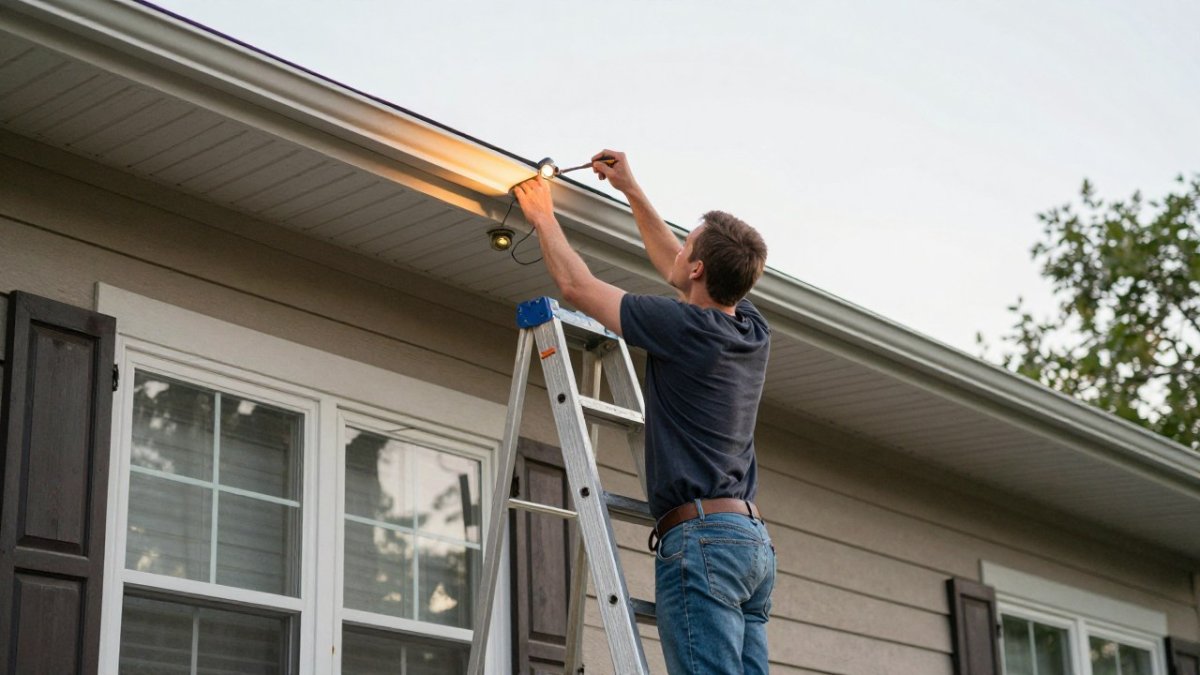
Professional installation from Curb Appeal Permanent Lights uses concealed, app-controlled fixtures. If you're weighing puck versus strip for your own roofline, discrete points of light, spaced along your roofline explains the difference a kit can't replicate.
Durability, Weather Resistance, and Long-Term Maintenance Costs
Durability matters when choosing a permanent lighting system. Here is a consistent way to evaluate it.
A standardized way to compare systems. When you evaluate any brand, score it on the same five measures so the comparison is fair:
- Brightness consistency. Ask for lumen output per fixture and whether the controller dims uniformly across the run. Uneven dimming at the end of a long run is a common tell of undersized power supplies.
- Color accuracy. Warm white is the hardest color to get right; look for systems that hold a consistent white rather than drifting green or blue across fixtures.
- Weather exposure. Sealed connections, UV-rated housings, and mounting hardware rated for freeze-thaw cycles matter more than LED lifespan claims. Ask how splices are sealed and whether connections sit in a channel or exposed.
- App reliability. Scheduling that survives a router reboot, presets that load without lag, and onboarding you can complete without a support call are the practical tests.
- Warranty and repair access. Confirm what the warranty covers, who performs the repair, and how long a replacement takes.
Where systems actually fail.
Long-term maintenance costs. Ask every installer two questions before you buy: what does the warranty cover, and who repairs it?
If you're weighing puck versus strip for your own roofline, discrete points of light, spaced along your roofline explains the difference a kit can't replicate.
How to Choose a Permanent Lighting System for Your Home
Choose based on four decisions. First, professional versus DIY: if ladders and troubleshooting aren't for you, professional installation may suit you better. Second, fixture type: puck lighting casts individual downward cones for a classic look, while strip lighting traces one continuous line. Third, app quality: check scheduling, presets, and smart-home integration before you buy. Fourth, warranty and support: confirm who repairs failures and how fast.
- Coverage measured in linear feet, not guesswork
- Fixture type matched to your architecture
- App with scheduling and presets you can actually use
- Written warranty terms and local repair access
A traditional home can carry architectural lighting well when the fixtures are concealed and the default color is warm white. The system should look subtle on a Tuesday and festive on the Fourth of July.
See It On Your Home Before You Commit
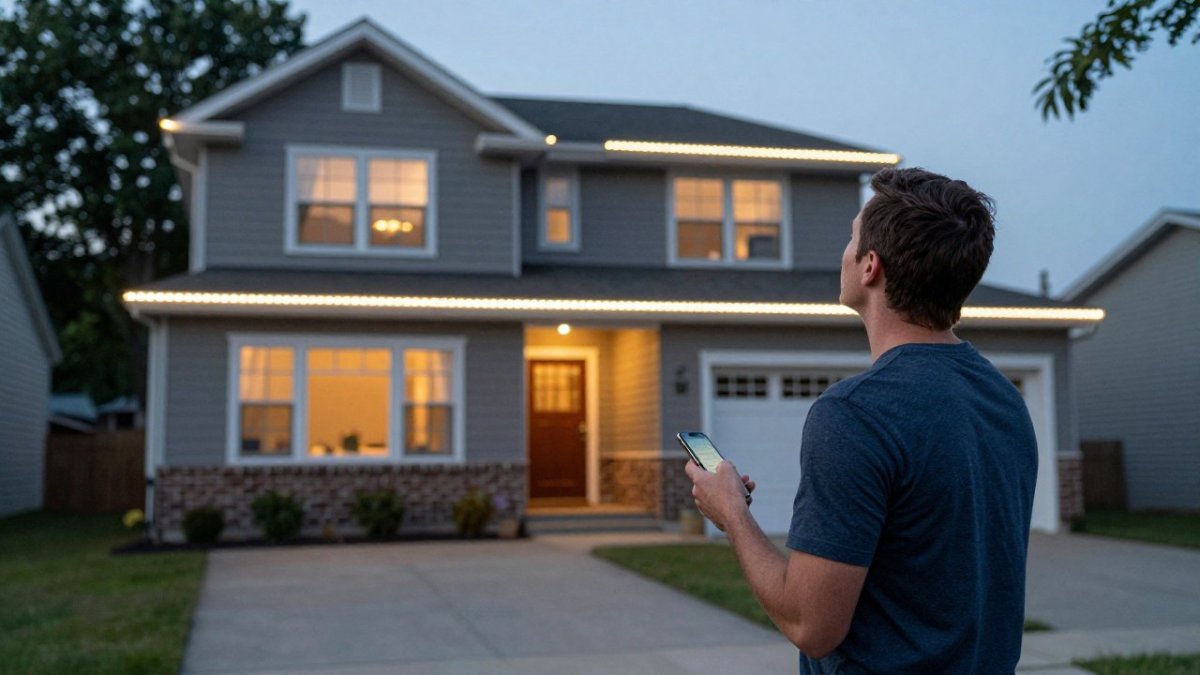
Before you commit, you can preview how a lighting design would look on your own home with the online photo visualizer. See it on your home and judge the design on your own architecture, not a showroom photo.
A permanent lighting system is a home improvement decision with a long tail: it changes how your house looks every night, not just in December. The right system disappears into the architecture by day and does the work by night, with no bins, no ladders, and no annual scramble.
If you're tired of the November ladder routine and want lighting that works year-round, start with a design you can actually see. Curb Appeal Permanent Lights installs concealed puck and LED strip systems with app-controlled color, brightness, and scheduling, plus an online visualizer that previews the result on your own home. Get started with Curb Appeal Permanent Lights and see your roofline lit before you commit.
Frequently Asked Questions
Are permanent holiday lights worth it compared to hiring seasonal installers?
For most homeowners who plan to stay put for several years, permanent holiday lighting pays off by eliminating annual installation fees and ladder work. You get year-round architectural white lighting plus holiday colors from one system. The tradeoff is a higher upfront cost than a single season of temporary lights. If you currently pay for professional hanging and removal every year, the break-even point usually arrives within a few seasons, and you avoid the physical risk of climbing ladders in cold weather.
What is the average cost of permanent holiday lighting?
Pricing depends on roofline length, fixture type, and whether you choose professional installation or a DIY kit. Request a quote based on your home's linear footage rather than comparing sticker prices across brands.
What are the downsides of permanent outdoor lights?
The main downsides are upfront cost and the need for a professional install on tricky rooflines. Some homeowners also find that poorly concealed tracks look cluttered during the day. Choosing a system with discreet puck or strip fixtures and a real warranty addresses most of these concerns. Check how the brand handles repairs before you buy, since a failed strand in a permanent system is harder to swap than a temporary string.
Can permanent holiday lights be installed yourself?
Yes, DIY kits exist and can work for single-story homes with simple rooflines. You will need to measure carefully, mount tracks or adhesive backing, and handle low-voltage wiring. The risks are improper sealing around penetrations, sagging tracks, and voiding the warranty if installation guidelines are not followed. For two-story homes, steep pitches, or anyone uncomfortable on a ladder, professional installation is safer and usually produces a cleaner daytime appearance.
How do Trimlight permanent Christmas lights compare to other systems?
A local installer who services your county is often more valuable than a brand name, because permanent lighting is only as good as the installation behind it.
